Bulgaria
Bulgaria boasts impressive mountain ranges in the west, such as the Pirin, perfect for hiking and winter sports, while the beaches of the Black Sea await you in the east. In between lies a fascinating diversity: UNESCO World Heritage Sites, Orthodox monasteries steeped in history, and a capital city that blends tradition and modernity. The country is multifaceted and well-developed, making it ideal for combined itineraries that can also include neighboring North Macedonia, Greece, Serbia, and Romania. A destination full of contrasts and discoveries!
Official language
Bulgarian
Capital city
Sofia
Form of government
republic
Area
110,994 km²
population
6,447,710
currency
Lev (from 01.01.2026 Euro)
independence
September 22, 1908
telephone area code
+359

UNESCO World Heritage
Church of Bojana
Riders of Madara
Thracian tomb Kasanlak
Rock Churches Ivanovo
Rila Monastery
Nessebar
Bulgaria – Diversity between the Black Sea and the Balkans
Bulgaria's charm lies in its diversity: between the glittering Black Sea coast, vast plains, and alpine heights, a land of contrasts unfolds. Those who travel here encounter ancient history, centuries-old monasteries, vibrant traditions – and a landscape that is sometimes gentle, sometimes rugged, but always breathtaking. A destination for explorers seeking depth – and beauty in diversity.
Sofia – The vibrant capital
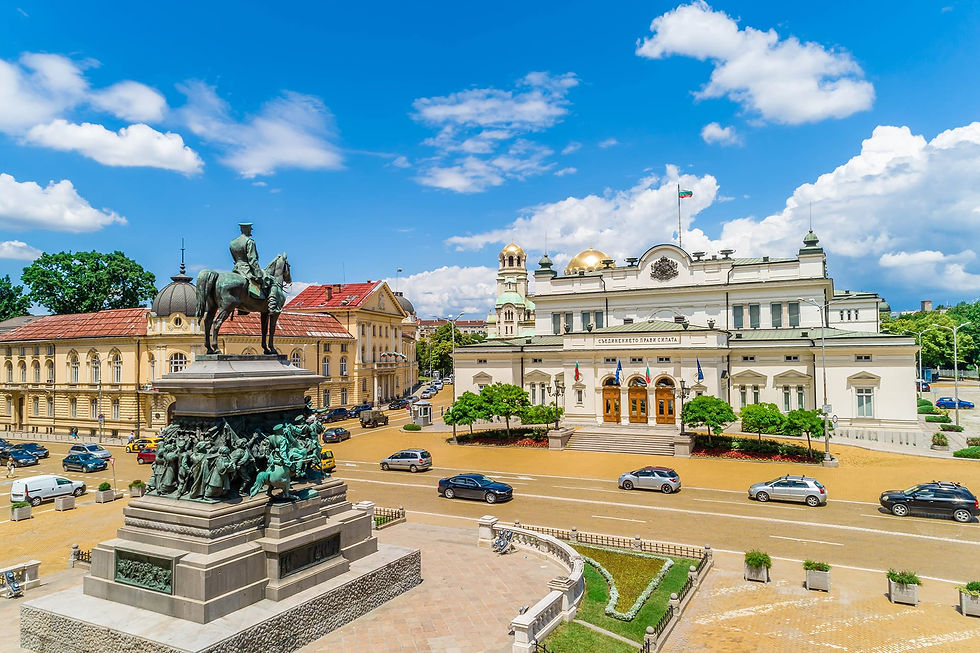
The capital city of Sofia blends ancient history with modern life. The impressive Alexander Nevsky Cathedral, the Roman Theatre, and the Vitosha Mountain Railway, which offers breathtaking views of the city, create the impression of a vibrant metropolis.
Plovdiv – European Capital of Culture
This ancient city is known for its well-preserved old town with Roman ruins, charming cafes, and colorful houses. The Roman theater and the old town are particularly worth seeing.
Cities with soul – Sofia and Plovdiv
Sofia is full of surprises. Life pulsates amidst ancient excavations and socialist monumental architecture. The shimmering gold Alexander Nevsky Cathedral, Roman ruins, and the proximity to Mount Vitosha make Bulgaria's capital a vibrant urban experience, a blend of history and the present.
Plovdiv, one of the oldest continuously inhabited cities in Europe, carries its history with ease. Cobblestone streets, painted townhouses, the Roman theater in the heart of the city – and everywhere you look, art, culture, and a touch of bohemian flair. No wonder it was the European Capital of Culture in 2019.
Bulgaria – Rich history, diverse nature and cultural diversity
The country is home to a blend of Eastern and Western cultures, reflected in its historical sites, architecture, and traditions. Bulgaria also boasts a diverse landscape, encompassing mountains, Black Sea coastlines, and fertile plains. Bulgaria has a long and eventful history, shaped by the Thracians, Greeks, Romans, Byzantines, and Ottomans. This is mirrored in its numerous historical sites, including ancient theaters, medieval castles, monasteries, mosques, and imperial palaces.
Cultural crossroads between East and West
Bulgaria is a land of contrasts – geographically and culturally. Between the Black Sea and the Rhodope Mountains, the Danube Valley and the Thracian hills, lies a landscape as diverse as its history. For millennia, Thracians, Greeks, Romans, Byzantines, and Ottomans have left their mark: in ruins and fortresses, in mosques, tsarist palaces, monasteries, and churches.
This cultural diversity is still palpable today – in the architecture, in the traditions, in the faces of the cities. Bulgaria is a country between worlds – and therein lies its charm.
The Tomb of Kazanlak – A Splendor of Colors from Antiquity
Deep beneath a hill near the city of Kazanlak lies a jewel of Thracian culture: the famous Kazanlak Tomb, a UNESCO World Heritage Site.
Built in the 4th century BC, it served as the final resting place of a Thracian nobleman – and today fascinates visitors primarily because of its exceptionally well-preserved wall paintings. In vibrant colors, the scenes on the walls depict festive banquets, chariot races, and a world full of symbolism and mythology.
Rila – Monastery, cultural heritage and spiritual heart of Bulgaria
Hidden in the wooded heights of the Rila Mountains, about a two-hour drive south of Sofia, lies a place that has captivated pilgrims and travelers for over a thousand years: the Rila Monastery. It is the largest and most important monastery in Bulgaria – and far more than a religious center. It is a symbol of national identity, cultural heritage, and spiritual continuity.
Founded in the 10th century by the hermit Ivan Rilski, the monastery developed over the centuries into a flourishing spiritual and cultural center. It acquired its present form in the 14th and 15th centuries – with mighty defensive walls, richly decorated facades, vibrant frescoes, and one of the most impressive monastery churches in Eastern Europe.
The UNESCO World Heritage Site of Rila is a place of peace and contemplation – but also a living testament to Bulgarian history. Anyone who strolls through the arcades, visits the monastery library with its medieval manuscripts, or hears the prayer bells in the courtyard senses: this is more than a monument – it is a living place.
Nessebar – History in Stone by the Sea
Situated on a narrow peninsula in the Black Sea, the old town of Nessebar enchants visitors with its unique rhythm. Cobblestone streets, crooked wooden houses from the Renaissance period, and the remains of ancient walls tell of a past spanning more than three thousand years.
In Nessebar, Thracian heritage, Byzantine religious architecture, and Ottoman influence blend into a cultural mosaic. More than 40 churches—some well-preserved, others romantically weathered—bear witness to the city's religious significance over the centuries. Particularly impressive are the intricate brick patterns of the medieval churches, which glow red and gold in the warm sunlight.
Despite its rich history, the town feels vibrant – small galleries, cafés overlooking the sea, and traditional restaurants invite you to linger. Nessebar is not a museum, but a place where history and the present meet in a completely natural way. It's no wonder that UNESCO declared the old town a World Heritage Site – it's a stage where time seems to have stood still, without ever appearing old.
Pirin National Park – The wild soul of Bulgaria
In southwestern Bulgaria, the Pirin Mountains rise with a majestic stillness that is both powerful and gentle. At the heart of this impressive mountain landscape lies the Pirin National Park – a treasure trove of biodiversity, wild beauty, and rugged pristine nature.
The park is a UNESCO World Heritage Site and stretches across alpine peaks, crystal-clear glacial lakes, dense forests, and rocky cirques. Here, over 1,300 plant species, including numerous endemic ones, meet wildlife such as chamois, brown bears, and golden eagles. Hiking trails lead through centuries-old black pine forests, past rushing mountain streams and tranquil alpine meadows.
The park includes the two strictly protected reserves "Bajovi Dupki – Dshindshiritza" and "Julen" – valuable refuges for flora and fauna. But Pirin is more than a national park. It is a place of grounding, inspiring, slowing down, and sharpening one's focus on what truly matters: the power and dignity of nature.
Conclusion
Bulgaria is a fascinating country that captivates with its rich history, stunning nature, and vibrant culture. Its picturesque Black Sea coast, majestic mountains, and vast plains make it a diverse travel destination that appeals to both culture and nature lovers.
